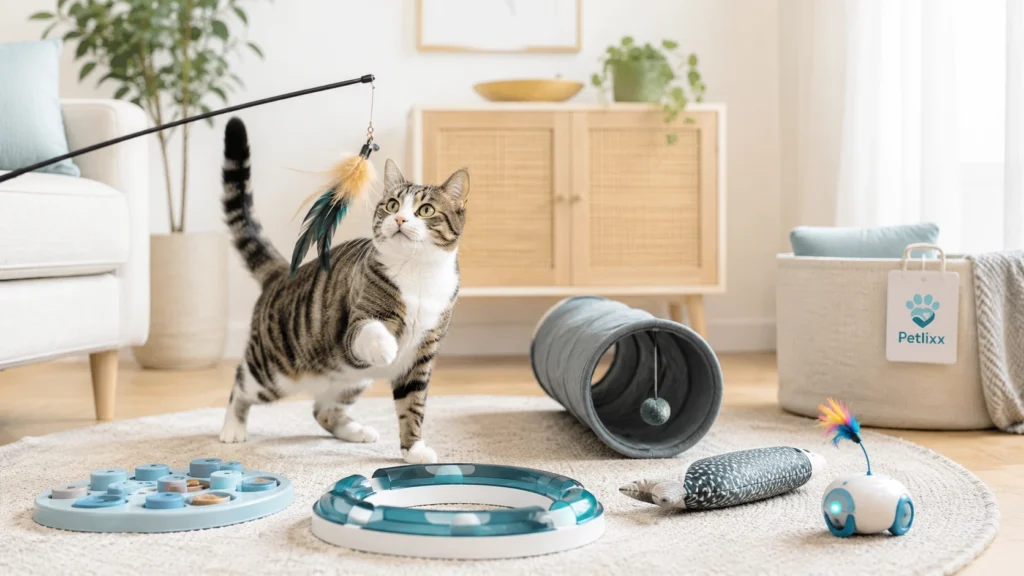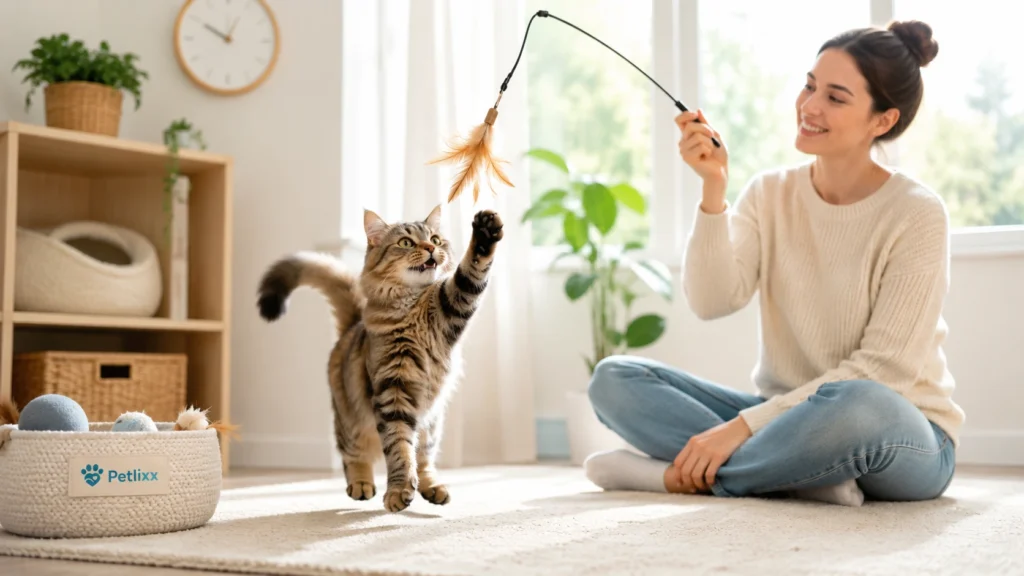
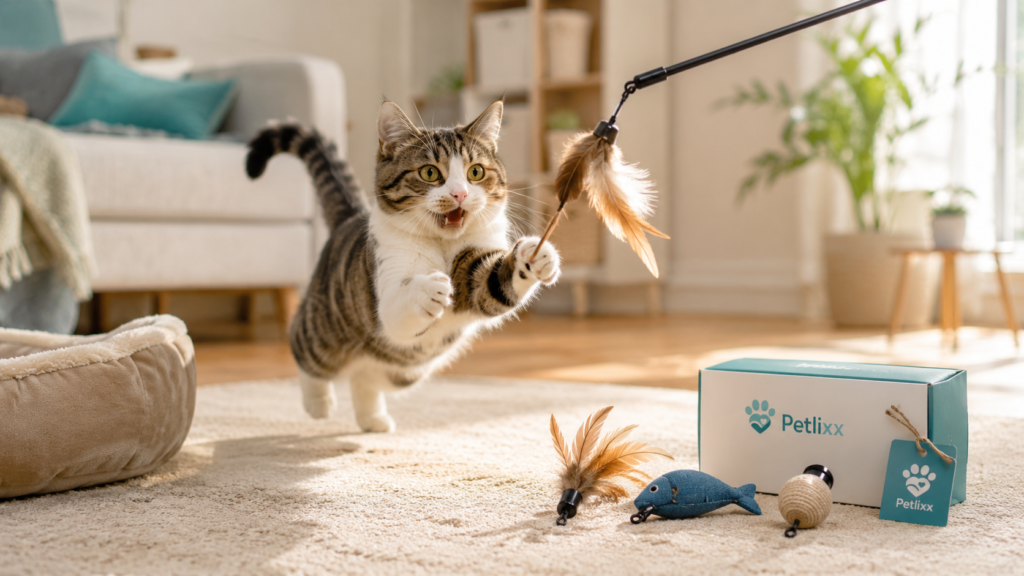
Cat wand toys are one of the simplest ways to turn indoor play into a more active and rewarding routine. A good wand lets you control speed, direction, and height so your cat can stalk, chase, jump, and pounce without using your hands as the target.
The best option depends on your cat’s age, energy level, confidence, and favorite type of movement. Some cats react quickly to feathers, while others prefer a soft fish, a small ball, or a toy that moves close to the floor.
In this guide, you will learn how to compare cat wand toys, which features matter most, how to play safely, and how to choose a style that keeps an indoor cat interested without making playtime frustrating.
Quick Answer
The best cat wand toys for indoor cats are lightweight, comfortable to control, durable enough for supervised play, and fitted with an attachment that matches the cat’s hunting style. A feather wand works well for jumping and aerial chasing, while a cloth fish or small ball is often better for stalking and ground-level pouncing.
Key Takeaways
- Choose a wand length that keeps your hands safely away from claws.
- Match the attachment to the way your cat prefers to chase.
- Use short, varied play sessions instead of repetitive movement.
- Let the cat catch the toy regularly so the game feels rewarding.
- Inspect feathers, strings, clips, and attachments before every session.
- Store wand toys after play because strings and loose parts should not be left unattended.
Table of Contents
Why Wand Toys Work Well for Indoor Cats
Indoor cats do not always get many opportunities to chase moving targets, climb, or explore changing environments. Wand toys for cats create controlled movement that can imitate prey without requiring a large room or complicated equipment.
The toy can move behind furniture, pause, change direction, or travel across the floor. These small changes encourage attention and make play more interesting than simply shaking the same object in front of the cat’s face.
International Cat Care explains that wand-style play can give cats an outlet for natural behaviors when the toy is moved like prey and the cat is allowed to catch it. Their guide to playing with your cat is a useful reference for building more realistic and satisfying play sessions.
Cat wand toys are also useful for owner-pet interaction. Because you control the movement, you can adjust the game to a shy kitten, an energetic adult, or a senior cat that prefers slower ground-level movement.
7 Best Cat Wand Toy Types for Indoor Cats
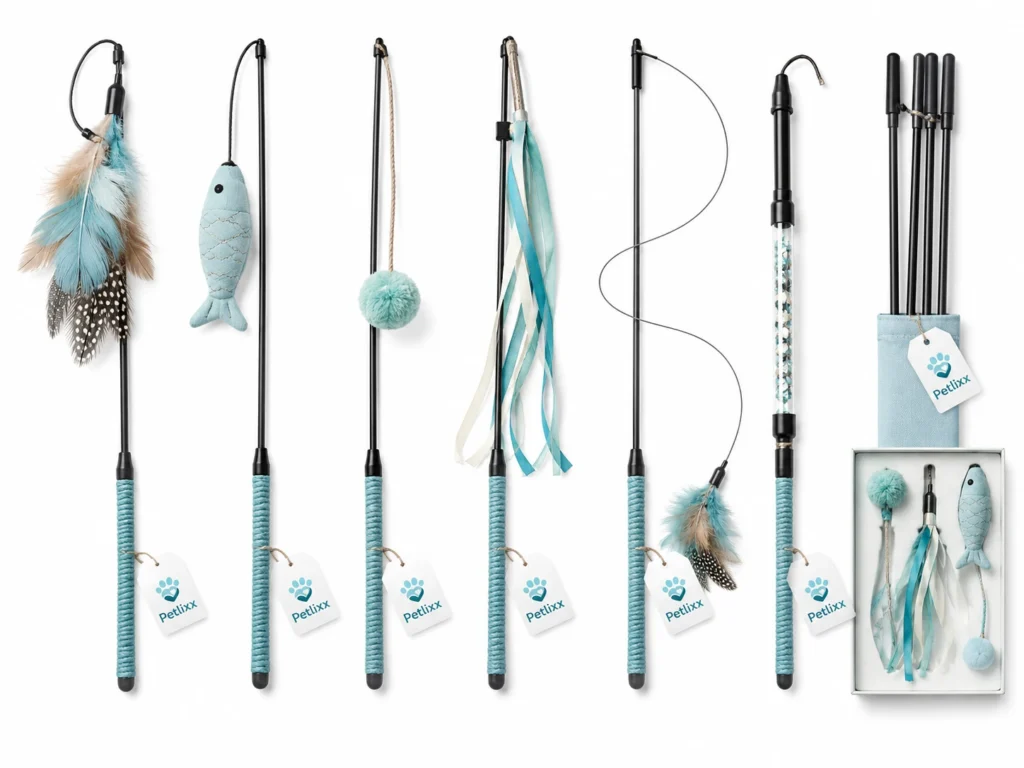
There is no single attachment that works for every cat. The seven styles below cover the most common preferences and make it easier to choose a practical starting point.
1. Feather Cat Wand Toy
A feather attachment creates light, unpredictable movement. It can flutter through the air, skim across the floor, or disappear behind a chair. This style is a strong choice for cats that enjoy jumping, swatting, and chasing fast movement.
A feather cat wand toy should always be used with supervision. Check the feathers and connection point after play, and remove the toy if loose pieces appear.
2. Cloth Fish Teaser Wand
A soft cloth fish is useful for cats that prefer stalking and pouncing instead of high jumps. Move it slowly along the floor, pause near a corner, and let it disappear briefly before bringing it back into view.
This type of cat teaser wand can be especially useful for cautious cats because the movement is easier to keep low, slow, and predictable.
3. Small Ball Wand Toy
A small ball attachment can roll, bounce, and change direction quickly. It works well for cats that react to short bursts of movement and enjoy batting objects across the floor.
When comparing cat wand toys with ball attachments, look for a secure connection and a ball that is too large to swallow.
4. Ribbon or Fabric Strip Wand
Ribbon-style attachments create flowing movement and can be dragged in wide curves. They are easy to control, but long ribbons should never be left available after play because cats may chew or swallow loose material.
5. Wire Teaser Toy
A wire teaser produces small bouncing movements with very little effort. Some cats find this highly engaging because the attachment changes direction quickly. Use it gently and avoid directing the wire toward the cat’s face.
6. Refillable Wand With Replaceable Attachments
A refillable wand allows you to switch between feathers, soft toys, and other attachments. This can reduce boredom because the same handle creates several different games.
Before buying, check that the clip closes securely and that replacement attachments are appropriate for the cat’s size and play style.
7. Multi-Style Cat Teaser Wand
A multi-style set is practical when you do not yet know what your cat prefers. The Petlixx Cat Teaser Wand Toy includes cloth fish, feather, and small ball options, giving you three movement styles for supervised indoor play.
This design makes it easier to test aerial chasing, ground stalking, and short bouncing movements without buying several separate toys.
Quick Comparison of Cat Wand Toys
| Wand Type | Best For | Movement Style | Main Safety Check |
|---|---|---|---|
| Feather Wand | Active cats and jumpers | Fluttering and aerial chasing | Check loose feathers |
| Cloth Fish Teaser | Shy cats and stalkers | Slow ground movement | Inspect seams and string |
| Small Ball Wand | Cats that enjoy batting | Rolling and bouncing | Use a secure, non-swallowable ball |
| Ribbon Wand | Wide flowing chases | Curves and dragging | Store ribbon after play |
| Wire Teaser | Quick reactions | Small unpredictable bounces | Keep wire away from the face |
| Refillable Wand | Variety and rotation | Changes with each attachment | Check clip security |
| Multi-Style Wand | Testing preferences | Ground, aerial, and bouncing play | Inspect every attachment |
How to Choose the Right Cat Wand Toy
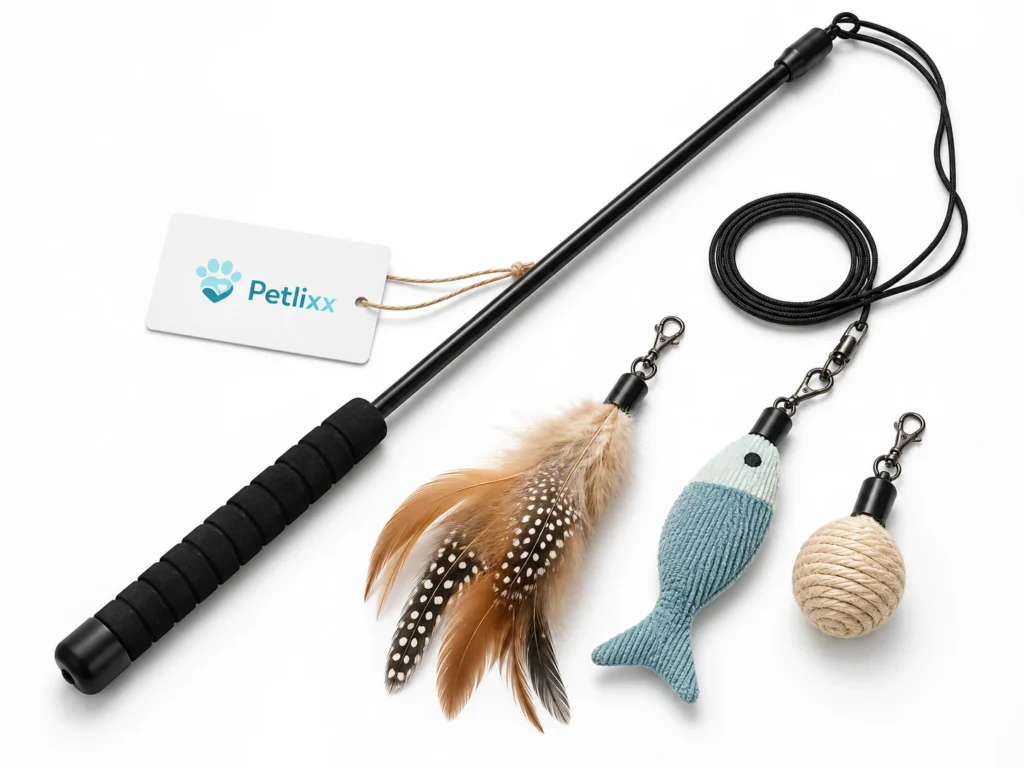
Before choosing a cat wand toy, think about how your cat naturally plays. A cat that watches from a distance may prefer slow ground movement, while a confident and active cat may respond better to faster direction changes and higher jumps.
Choose the Right Wand Length
A longer wand creates more distance between your hands and the moving attachment. This helps prevent accidental scratches and gives you a wider range of movement. The handle should still feel light enough to control comfortably.
Match the Attachment to Your Cat
Feathers are useful for aerial chasing. Cloth fish and soft mice are better for stalking. Small balls work well for batting and quick direction changes. The best cat wand toys often succeed because the attachment matches the individual cat rather than because the toy is expensive.
Check the Connection Points
Look at the string, clip, knot, and attachment before every session. Any loose or damaged part can become a safety risk. A durable handle is useful, but the smaller connection points usually need the most attention.
Consider Noise and Texture
Some cats enjoy bells or crinkly textures, while others become cautious around unexpected noise. Start quietly and observe the cat’s body language before adding faster movement or sound.
Choose Easy Storage
The toy should be easy to place in a closed cupboard or drawer after play. This is important because cat toys wand attachments often include strings, feathers, or small pieces that are designed for supervised use.
How to Use Cat Wand Toys Safely
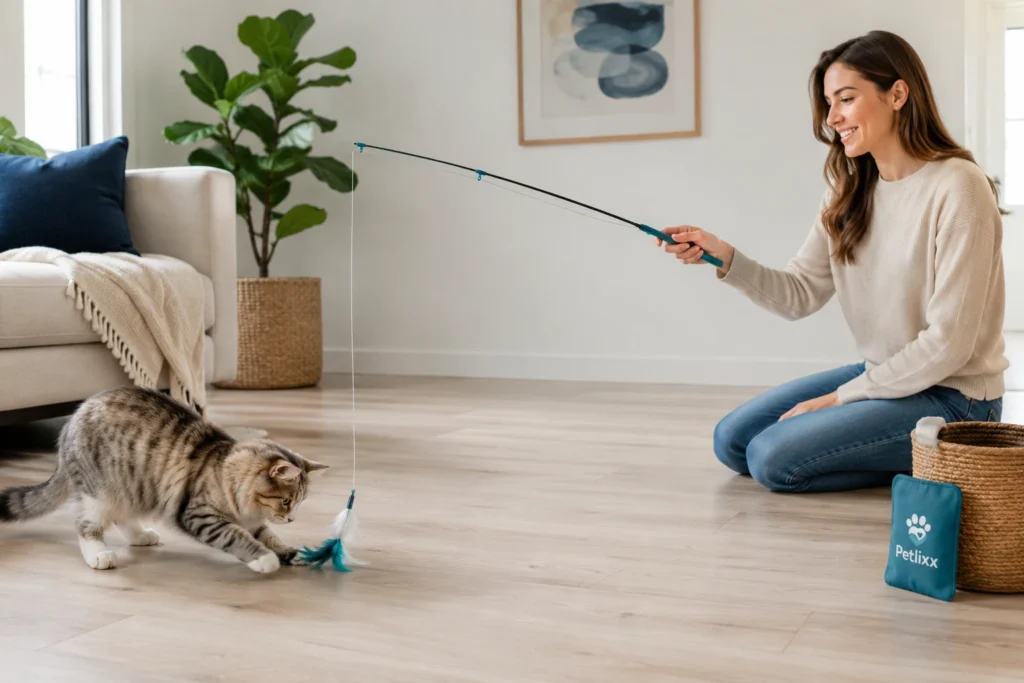
Safe play is not only about the toy. It also depends on how the game is controlled. VCA Animal Hospitals recommends using a wand to keep hands away from the target and allowing the cat to stalk, chase, and successfully catch the toy.
Start With Slow Prey-Like Movement
Do not begin by shaking the toy directly in the cat’s face. Move it away from the cat, pause, hide it partially, and let the cat approach. Prey usually moves away, so this often creates a more natural response.
Let Your Cat Catch the Toy
A game becomes frustrating when the cat never succeeds. Allow regular catches, pause for a few seconds, and then restart. The goal is not to keep the toy permanently out of reach.
Use Short Sessions
Several short sessions are often easier to manage than one long session. Stop while the cat is still interested, especially with kittens or cats that become overstimulated.
Keep the Toy Away From the Face
Avoid swinging hard attachments toward the eyes, nose, or mouth. Keep movement in open space and use lower, slower play for cats with limited mobility.
Store the Wand After Play
Do not leave a teaser wand for cats unattended. Strings, ribbons, feathers, and clips can be chewed or swallowed. Inspect the toy, put it away, and replace damaged parts before the next session.
A Simple 10-Minute Cat Wand Play Routine
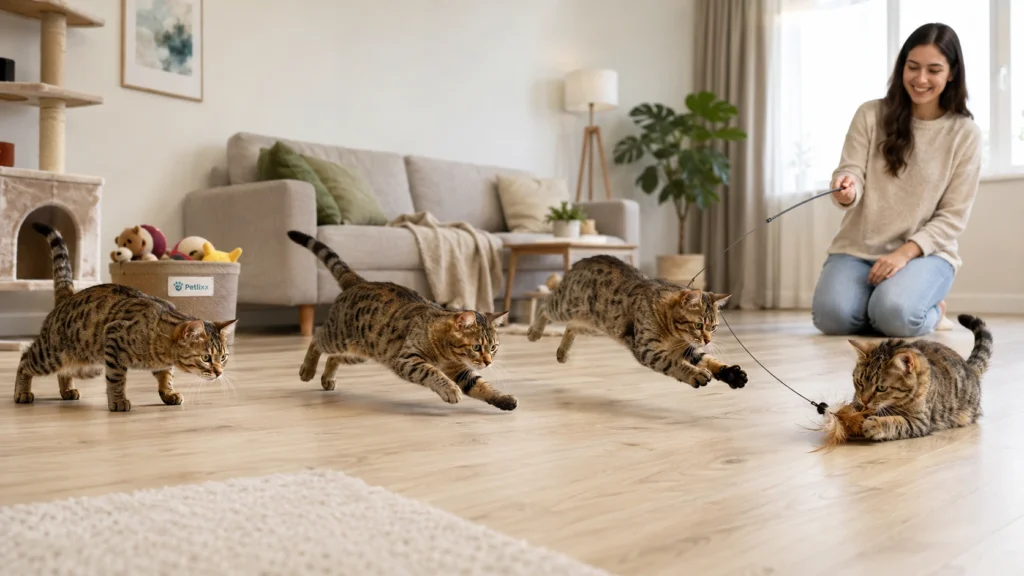
A structured routine makes play easier and prevents the movement from becoming repetitive.
- Minute 1-2: Move the attachment slowly along the floor and let the cat watch.
- Minute 3-4: Add short direction changes and hide the toy behind furniture.
- Minute 5-6: Create a few faster chases or small jumps if the cat is comfortable.
- Minute 7-8: Slow the movement and allow several successful catches.
- Minute 9-10: Finish with a final catch, calm praise, and a small reward if appropriate.
This routine can be shortened for kittens, senior cats, or cats that lose interest quickly. The quality of movement matters more than the exact duration.
Common Mistakes to Avoid
Moving the Toy Too Fast From the Beginning
Fast movement can make a cautious cat disengage. Start slowly, then increase speed after the cat begins following the attachment.
Only Moving the Toy in the Air
Many cats prefer stalking along the floor. Combine low movement, pauses, hiding, and occasional jumps instead of using constant aerial motion.
Never Allowing a Catch
Cats need successful moments. Letting the cat catch and hold the toy briefly makes the game more complete and can keep interest stronger.
Using Hands as Part of the Game
Do not switch between the wand and your fingers as targets. This can teach the cat that hands are appropriate objects to bite or scratch.
Leaving the Toy Unattended
Even durable cat wand toys are interactive products, not unsupervised chew toys. Store them safely when the session ends.
Cat Wand Toys for Different Life Stages
Kittens
Kittens often enjoy quick movement but have limited coordination. Use lightweight attachments, short sessions, and plenty of easy catches. Avoid encouraging very high jumps on slippery floors.
Adult Indoor Cats
Adult cats may benefit from more variety. Rotate a feather, cloth fish, and ball attachment, and change the route of the toy around the room.
Senior Cats
Senior cats can still enjoy wand play, but movement may need to stay low and slow. Drag the toy gently, use shorter distances, and avoid repeated jumping. Ask a veterinarian for advice if the cat has pain, arthritis, breathing problems, or other health concerns.
Our Recommended Cat Wand Toy for Indoor Play
The Petlixx Cat Teaser Wand Toy is a flexible option for kittens and adult indoor cats. Its available cloth fish, feather, and small ball styles let you match the toy to different hunting preferences.
Use the feather for fluttering and jumping, the cloth fish for stalking across the floor, and the small ball for quick batting movements. You can also explore the Cat Essentials collection for more products designed for everyday indoor cat routines.
Frequently Asked Questions
Are cat wand toys good for indoor cats?
Yes. Cat wand toys can encourage chasing, stalking, pouncing, and owner-guided play indoors. The toy should be used with supervision and stored after each session.
How often should I play with a cat wand?
The best schedule depends on the cat’s age, health, and interest. Short regular sessions are usually easier to maintain than one long session.
Which attachment is best for a cat wand?
Feathers suit cats that enjoy aerial chasing, cloth toys suit ground stalking, and small balls suit batting and bouncing games. Testing more than one style is often the easiest way to learn the cat’s preference.
Can kittens use cat wand toys?
Yes, but use lightweight attachments, gentle movement, and close supervision. Keep jumps low and stop before the kitten becomes overtired.
Should I leave a cat wand toy out all day?
No. Wand toys often contain strings, feathers, ribbons, or small attachments. Store the toy after play and inspect it before the next session.
How do I keep a cat interested in a wand toy?
Change the speed, direction, height, attachment, and location of the game. Add pauses and hiding movements, and allow the cat to catch the toy regularly.
Final Thoughts
The best cat wand toys are not necessarily the most complicated. A comfortable handle, secure attachment, safe storage, and movement that matches the cat’s natural play style are more important.
Start with one or two attachment types, observe what your cat follows most closely, and keep sessions short and rewarding. With supervision and regular variety, a cat wand toy can become a practical part of an indoor enrichment routine.
For more practical product and enrichment guides, explore the Petlixx blog.