
The right dog grooming brush depends almost entirely on your dog’s coat type — a brush that works beautifully on a short-haired Labrador will do very little for a double-coated Husky. Here’s how to match the brush to the coat, and which type gives you the most control for the least effort.
Key Takeaways
- Slicker brushes work on almost every coat type and are the easiest all-around pick for first-time buyers.
- Undercoat rakes are essential for double-coated breeds (Huskies, Shepherds) during shedding season.
- Bristle brushes suit short, smooth coats best and won’t tug on longer fur.
- Brushing 2–3 times a week reduces shedding and matting more than one long session weekly.
Table of Contents
Slicker brushes
A slicker brush has fine, closely-spaced wire bristles set at an angle, designed to pull loose undercoat and light tangles without digging into the skin. It works on nearly every coat length, which makes it the safest first purchase if you only want to own one brush. Look for one with a cushioned head — rigid slickers are harder on both your wrist and your dog’s skin.
Undercoat rakes
Double-coated breeds — Huskies, German Shepherds, Golden Retrievers — blow their undercoat seasonally, and a slicker brush alone won’t keep up. An undercoat rake has longer, wider-set teeth that reach through the topcoat to pull loose fluff out from underneath, cutting shedding dramatically during those weeks.
Bristle brushes
Natural or synthetic bristle brushes suit short-haired, smooth-coated dogs — think Beagles, Boxers, or Pugs. They distribute natural skin oils through the coat for shine and pick up loose surface hair, but they don’t have the reach to deal with a thick undercoat.
How often to brush
- Short-haired dogs: once a week is usually enough
- Medium-length coats: 2–3 times a week
- Long-haired or double-coated dogs: every other day, daily during seasonal shedding
Grooming pairs naturally with paw hygiene — see our guide on Best Dog Paw Cleaners to cover both ends of your dog’s at-home care routine.

Why regular brushing matters beyond shedding
According to the American Kennel Club’s grooming guidance, regular brushing does more than control loose hair — it distributes natural oils, prevents painful mats from forming close to the skin, and gives owners a chance to spot fleas, ticks, or lumps early. A dog groomed a few times a week is genuinely easier to keep healthy, not just tidy.
Dealing with mats and tangles
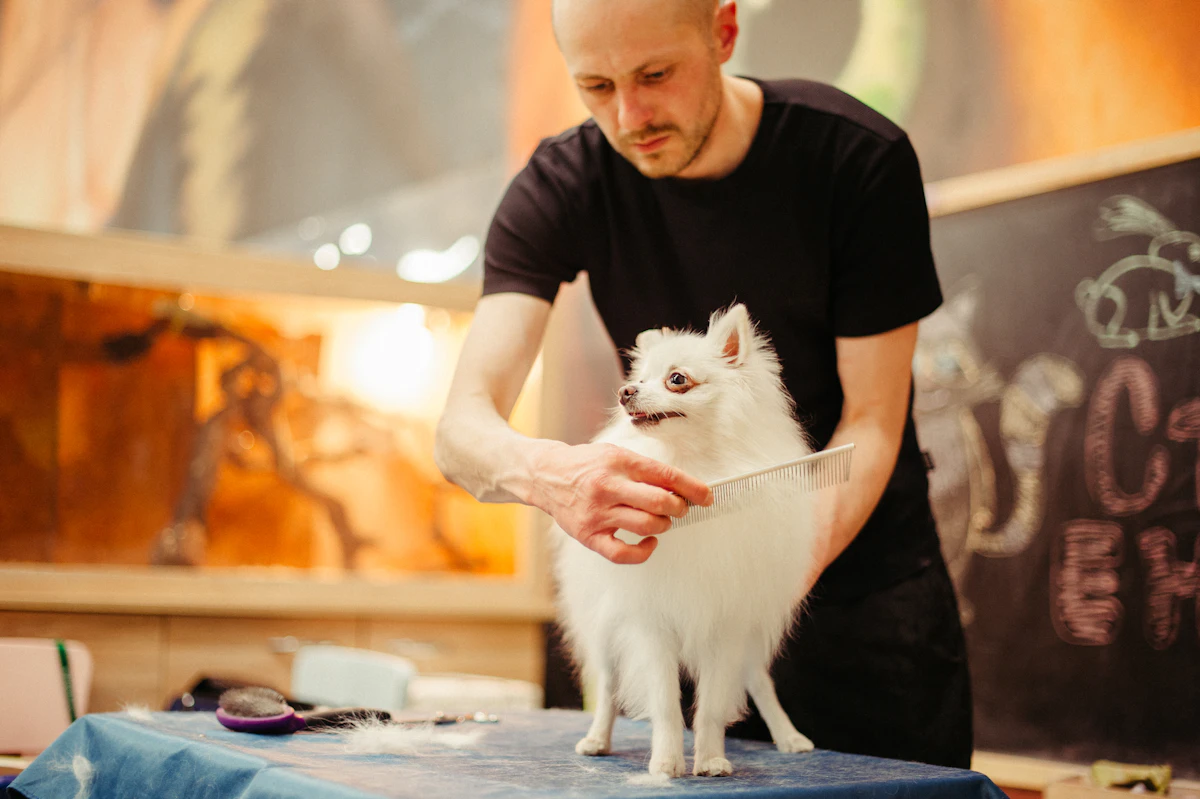
A dog grooming brush works best on clean, dry fur — brushing over a fresh mat with a slicker can pull painfully at the skin instead of loosening it. For small tangles, work in short sections starting at the tips and gradually moving toward the skin, holding the base of the fur to avoid tugging. Stubborn mats close to the skin, especially behind the ears or under the legs, are often safer left to a groomer with clippers than fought through with a brush alone.
A light detangling spray before brushing makes a real difference on long or curly coats, cutting down on breakage and making the whole session faster for both of you. Most dogs tolerate brushing far better once mats stop pulling at their skin, which is often the actual reason a dog seems to “hate” being brushed.
Frequently Asked Questions
What’s the single best dog grooming brush to start with?
A slicker brush — it works reasonably well across most coat types and is the most versatile first purchase.
Can brushing too often hurt my dog’s skin?
Brushing itself rarely causes harm, but pressing too hard with a slicker brush can irritate the skin. Let the bristles do the work rather than pressing firmly.
Browse our full Pet Health & Care collection for grooming and hygiene essentials.